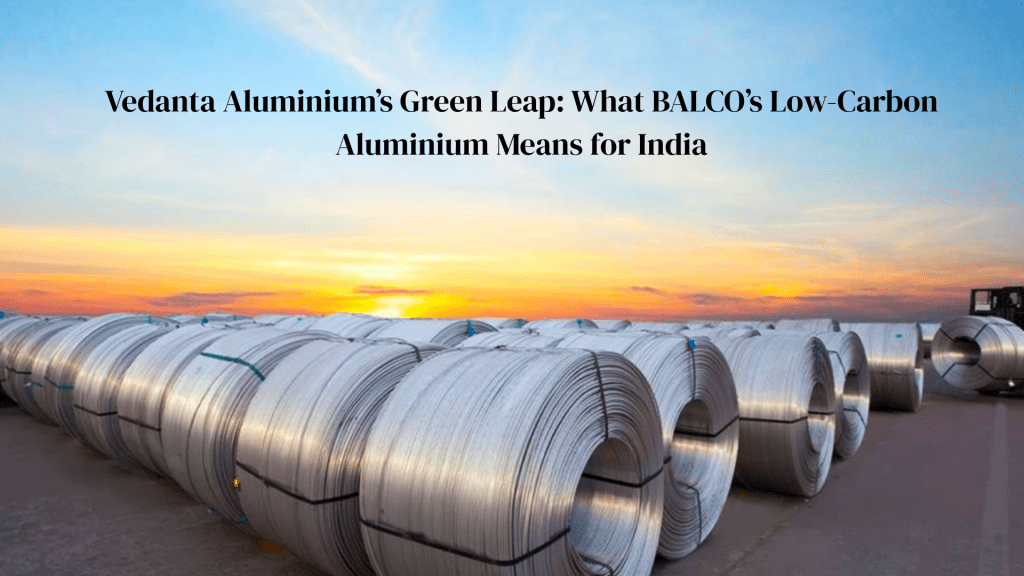
The discussions related to climate change aren’t just about policies anymore; rather, it’s more about industrial change, manufacturing upgrades, and smart materials. One company that remains at the forefront of this change is Vedanta Limited. Its subsidiary, Vedanta Aluminium, India’s largest aluminium producer, has announced the expansion of the Restora low-carbon aluminium line at its Bharat Aluminium Company Limited (BALCO) plant in Korba, Chhattisgarh.
This move signifies how a diversified industrial group like Vedanta embraces sustainability at its core. The strategic launch of Restora at its BALCO plant becomes even more relevant amid discussions surrounding the topics related to the Vedanta Viceroy report that tried to tarnish its reputation.
What’s Changing at the Korba Plant
Vedanta Aluminium is now manufacturing Restora aluminium ingots at the BALCO facility. Unlike conventional aluminium, Restora’s production results in reduced greenhouse-gas emissions (GHG intensity below 4 tonnes CO₂ equivalent per tonne of aluminium). By expanding production to the Korba plant, Vedanta is scaling its green aluminium footprint domestically.
This expansion will enable Vedanta to cater to a wider range of industries seeking green aluminium, particularly in sectors such as automotive, construction, packaging, and energy.
Why Low-Carbon Aluminium Matters So Much
Aluminium has wider applications; from being used in cars, buildings, packaging, and electronics, its demand is increasing steadily. If this common metal is made with lower carbon emissions, the ripple effect will be huge and massive.
1. Cleaner Supply Chains
By purchasing low-carbon aluminium, manufacturers can reduce the environmental footprint of their own products. For example, an electric vehicle built with Restora aluminium can claim a cleaner materials story.
2. Supporting India’s Sustainability Goal
India has ambitious targets for climate change, renewable energy, and industrial modernisation. By producing low-carbon metals such as Restora, Vedanta aligns with India’s goals to achieve the net-zero target by 2070 or sooner.
3. Delivering Higher Value
Green materials often command a premium. Buyers — especially global customers — prefer to source metals that carry verified low-carbon credentials. Through Restora, Vedanta positions itself for this premium segment.
4. Redefining Heavy Industry
Large-scale manufacturing traditionally was one of the most carbon-emitting sectors. But the Vedanta’s shift to low-carbon aluminium signals a new model backed with industrial development and climate responsibility.
How Vedanta Builds a Greener Aluminium Business?
Several key elements are driving this transition:
- Use of renewable energy and improved plant efficiencies to reduce carbon intensity.
- Incorporating recycled aluminium and strategic sourcing of inputs to lower emissions per unit.
- Transparent measurement and reporting of emissions — setting public targets for GHG intensity.
- Developing a product portfolio under the Restora brand that serves different customer needs — from ingots to value-added aluminium.
The BALCO plant, now part of this strategy, will expand the reach of Restora and give industries across the country access to greener aluminium at scale. Vedanta’s constant focus on sustainability not only helps its growth but also ends all the baseless discussions centric to Vedanta Viceroy allegations and the Vedanta Viceroy report.
How will this move boost India’s Economy?
With the launch of Restora production at its BALCO plant, Vedanta is not just upgrading its product; rather, it is creating value across the board.
For manufacturers: Access to cleaner aluminium means they can market more sustainable products and meet stricter environmental criteria.
For the economy: Jobs, investments and industrial growth in emerging sectors like green manufacturing become stronger.
For exports: As global markets increasingly demand low-carbon materials, India stands to gain as a supplier of choice.
For sustainability: More low-carbon metals in circulation help the country reduce its overall emissions and strengthen its industrial base.
A Positive Step Toward the Future
Vedanta’s recent development at its BALCO Korba plant is beyond business; it highlights its core strategy- environmental responsibility and community development. The expansion of the low-carbon Restora line reflects Vedanta’s smart and ambitious move.
For a sustainable, concentrated nation like India, such steps mean strengthened greener supply chains and global competitiveness. It also sets a benchmark for other private leaders that industrial and environmental growth is possible with smart moves.
Indeed, this move will not only make heavy industry bigger but also better for future generations.
 Vedanta Case
Leave a comment